What Is the Difference Between a Pool Cleaner and a Pool Vacuum? Explained Simply
Swimming pools are fun–but cleaning them? Not so much. The majority of pool owners soon learn that the process of cleaning up the pool and keeping the water clear is not merely a matter of picking up leaves using a net. You meet such devices as pool cleaners and pool vacuums, and there the confusion usually starts.
So, what is the difference between a pool cleaner and a pool vacuum? We will simplify it in a simple, understandable, and realistic manner so that you can make up your mind about which one is really necessary in your pool.
This guide canhelp you make the right choice whether you are a new pool owner or simply decide to upgrade your maintenance tools.
Pool Basics: Why it is important to clean the pool regularly
We should first know the importance of proper pool cleaning before we get into the dissimilarities. The debris, such as leaves, bugs, sunscreen residue, and dirt can:
Promote algae growth
Clog filters and pumps
Cause the water to become untenable for swimming.
Increase chemical usage
And you are not simply cleaning with the right tools, but you are keeping the swimming environment healthy. That is why it is important to comprehend what is the distinction between a pool cleaner and a pool vacuum.
What Is a Pool Vacuum?
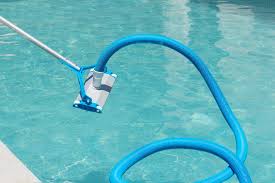
A pool vacuum is a machine that cleans the bottom and the sides of your pool. Consider it the pool maintenance manual worker.
How Pool Vacuums Work
Pool Vacuums are attached to your pool filtration system or run through a pump:
Suction-side vacuums are fitted to the skimmer or special suction line and rely on the pump of the pool to generate suction.
Pressure-side vacuums are attached to a return line, and the power of water pressure is employed to transfer debris to another bag.
There are ones that you have to push yourself through across the floor of the poo,l and there are those ones that are semi-automatic.
Best For
Pool vacuums are ideal for:
Thickest debris (gravel, leaves, sticks).
Cleaning specific spots
Pools that fail to accumulate debris uniformly.
They can be used as an excellent choice for targeted cleaning and deeper debris removal.
What Is a Pool Cleaner?
The phrase pool cleaner is more comprehensive. It may contain robotic cleaners, automatic cleaners, and, in a broad sense, even pool vacuums. In an actual sense, however, when specialists refer to a pool cleaner, they refer to automated systems that clean without much human intervention.
Types of Pool Cleaners
Here’s a quick breakdown:
Robotic Pool Cleaners
Insert into electric sockets.
Freestyle: move freely in the pool.
Have built-in filtration
Filter, scrub, and vacuum at the same time.
The automatic suction or pressure cleaners
Attach to existing plumbing
Labor instinctively, without much supervision.
Clean the floor and occasionally the walls of the pool.
Best For
Pool cleaners are best for:
Automated, routine maintenance.
Large pools
Busy pool owners prefer to be hands-off.
They save time, and in most cases, they clean better than manual vacuums.
Competition: Pool Cleaner vs. Pool Vacuum
Now that you know what each tool does, let’s compare them directly to answer what the difference is between a pool cleaner and a pool vacuum.
Automation
Pool Vacuums: The vast majority are manual or semi-automatic.
Pool Cleaners: Fully automatic in most models.
The majority of the work is done by pool cleaners. The use of pool vacuums may need some work or attention.
Cleaning Scope
Pool Vacuums: Good in situations of spot treatment and heavy debris.
Pool Cleaners: good in the maintenance of whole pools that are maintained on a regular basis.
Vacuuming is more targeted. Cleaning is more inclusive.
Installation and Ease
Pool Vacuums: Simpler to install and need more attention by the operator.
Pool Cleaners: More difficult to install, but less hands-on.
A pool cleaner is better off if you want a set-and-forget option.
Cost
Pool Vacuums: Cheap.
Pool Cleaners: They are frequently costlier at the outset.
The long term value, however, may be in favor of cleaners since they last longer on the filter and use less of the chemicals.
When to Use Each
Knowing when to hire a pool cleaner and when to hire a pool vacuum will ensure that your water is always clean and your pool equipment lasts.
Use a Pool Vacuum When
You can see rubbish accumulating on the floor.
You have had a tempest or leaves rained in your pool.
You are performing deep spot cleaning.
It is your place to call when you need to remove debris on a one-off or targeted basis.
Use a Pool Cleaner When
You desire regular servicing.
Your style of cleaning is hands-off.
Your swimming pool is frequently dirty.
A pool cleaner turns into a workhorse for many pool owners.
Some of the common myths about pool cleaning
Here are a few myths:
Myth: A vacuum and a cleaner are one and the same in pools
Fact: They both clean pools, but they perform different roles. A pool cleaner can be much more of a system that cleans without a lot of human intervention, whereas a pool vacuum involves more human intervention.
Myth: There Is Never a Better Tool Than the Other
Truth: They’re complementary. Most pool owners combine both- a robotic cleaner to maintain the pool on a daily basis and a vacuum to remove heavy debris on rare occasions.
Myth: Pool Cleaners Swimming Pools wear out filters more quickly
Fact: There are actually cleaners that guard the filters with debris that is trapped prior to passing into the filtration system.
The Question of Selecting the Best Alternative to your Pool
The decision between a pool cleaner and a pool vacuum is not about which tool is the best. It is all about choosing the one that suits you.
Ask yourself:
How frequently do you have debris in your pool?
Would you like to have all automated cleaning?
What is your budget?
How large is your pool?
A pool cleaner might be worth the money if you would like to be hands-off. A pool vacuum could be the ideal choice if you are cost-effective and simply require some periodic cleaning.
Conclusions of What Is the Difference between a Pool Cleaner and a Pool Vacuum
So what have we learned? The answer to what is the difference between a pool cleaner and a pool vacuum? boils down to automation, purpose, and usage. A pool vacuum is a more conventional device that may require human control, whereas a pool cleaner is self-directed and can be a workhorse that keeps your pool in swimming shape with minimal effort.
Did you check our “Why do pool vacuums stop working?” post?
References
- In The Swim Pool School – Pool Cleaning Basics
https://intheswim.com/pool-school/ - Swim University – Types of Pool Cleaners and How They Work
https://www.swimuniversity.com/pool-cleaners/ - Trouble Free Pool – Robotic vs. Suction Pool Cleaners
https://www.troublefreepool.com/blog/ - Leslie’s Pool Supplies – How to Vacuum a Pool
https://lesliespool.com/blog/how-to-vacuum-a-pool.html