Why Do Pool Vacuums Stop Working? A Complete Troubleshooting Guide
If you’ve ever geared up for a relaxing pool day only to discover your cleaner isn’t moving, you’ve probably wondered: Why do pool vacuums stop working? It is so annoying that you have a pool that you rely on for a regular cleaning schedule to keep it crystal clear.
The good news? The majority of pool vacuum problems are normal, easily diagnosed, and in most cases, easy to repair. We will deconstruct the most common causes, how to troubleshoot them, and when it is necessary to call in a professional in this guide.
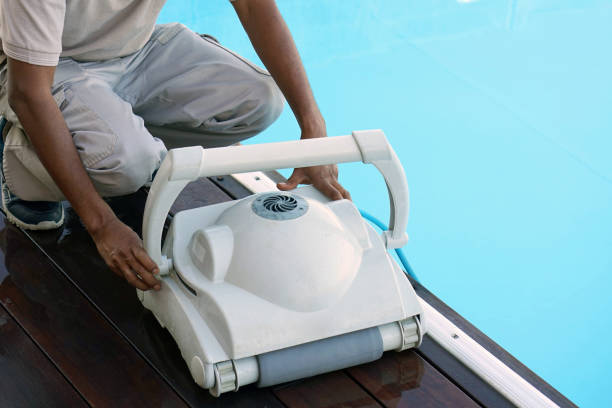
Why Do Pool Vacuums Stop Working? Common Causes Explained
The first step to finding the solution to the problem is to understand the mechanism of your pool vacuum. Regardless of the type of cleaner that you have, either a suction-side, pressure, or robotic cleaner, all cleaners need clean water flow, clean filters, and working parts to perform effectively.
When that balance is upset, something interferes with performance–or halts it altogether.
We will examine the most widespread offenders.
Clogged Hoses or Filters
One of the best reasons why pool vacuums do not work is because of limited water flow.
If you’re asking, Why do pool vacuums stop working?, start by checking for:
Debris is blocking the hose
A full pump basket
A dirty pool filter
Leaves are impregnated within the vacuum head.
Vacuums of pools rely on constant suction or pressure. Any minor obstruction would radically decrease productivity.
Quick Fix:
Unplug the hoses and run them under the hose. Wash the skimmer basket and backwash or rinse your filter when necessary.
Air Leaks in the System
Air leakage is a cunning issue that may result in your vacuum running slowly or not running.
Common leak points include:
Cracked hoses
Loose hose connections
Worn O-rings
Poorly sealed pump lids
Suction reduces when air is introduced to the system. Bubbles may come back to the pool via the return jets.
Quick Fix:
Check hose attachments and fit fittings. Install new damaged seals or hoses.
Pump or Motor Issues
Your vacuum has to run on the pool pump unless it is robotic. When your pump is not efficient, your cleaner will not be efficient either.
Potential pump issues are:
Low water level in the pool
Clogged impeller
Worn-out motor
Electrical issues
When the pump starts to sound unusually loud or when it is unable to prime, it might require service.
Quick Fix:
Make sure that the water level in the pool is half full of the skimmer hole. Empty the pump basket and inspect it for apparent obstructions.
Why Do Pool Vacuums Stop Working? Type-Specific Problems
There are various kinds of pool vacuums that have various problems. Determining the type of vacuum that can be used to reduce the cause.
Suction-Side Pool Vacuums
Suction cleaners are mounted to a skimmer or a special suction line.
Common issues include:
Poor suction as a result of contaminated filters
Incorrect hose length
Stuck diaphragm or flapper
When your vacuum runs slowly or does not move at all, then there is a high probability that the water is limited.
Pressure-Side Pool Vacuums
Pressure-side cleaners are dependent on the pressure of the return water, and in most case,s a booster pump is needed.
Problems may include:
Clogged debris bag
Booster pump malfunction
Broken drive belts
In case the unit does not pick up the debris even when it is moving, the collection bag can be just full.
Robotic Pool Vacuums
Robotic cleaners do not even share a pool pump with your pool.
The typical problems of robots are:
Power supply failure
Tangled floating cable
Dirty filter cartridges
Worn drive tracks
In case the robot activates, but it does not climb walls and move correctly, check the tracks and brushes.
Such manufacturers as Hayward Industries, Inc., Pentair plc, and Zodiac Pool Systems offer troubleshooting instructions in their models.
Power Supply or Electricity Problems
In the case of robotic cleaners, failure comes as a result of power problems.
Check for:
Tripped GFCI outlets
Damaged cords
Faulty power supplies
You must always make sure that your outlet is operational by using a different gadget.
In case of any suspicion of internal electrical failure, contact an expert. Water and electricity cannot be considered a DIY compatible pair.
Mechanical Wear and Tear
With time, normal use leads to the degradation of parts. Wheels become worn, belts become loose, and brushes become flat.
Signs of mechanical wear:
The cleaner clogs up so often
Reduced climbing ability
Grinding noises
Uneven movement patterns
A replacement of small parts can significantly increase the lifespan of your vacuum.
Annual inspections are suggested by most manufacturers, particularly prior to the peak swim season.
Inappropriate Set-up or Installation
In other cases, it is not a mechanical problem, but a setup problem.
Double-check:
Hose length is equal to the size of the pool
Sections of the hose are completely interconnected
Skimmer diverter valves are set properly
Booster pumps have been primed
Poor installation is also very prevalent, particularly following winter storage.
Performance Can Be Affected by Pool Chemistry
Surprisingly, bad water chemistry may also be a problem with vacuity.
Imbalanced water can:
Result in the calcium deposition
Erosion of internal parts
Reduce seal effectiveness
The Centers of Disease Control and Prevention CDC argue that it is not only the safety of the swimmers, but the protection of the pool equipment as well, to maintain the proper pool chemistry.
Have your pool balanced to avoid damage in the long run.
When to Repair vs. Replace
If you’re repeatedly asking, Why do pool vacuums stop working?, it may be time to consider replacement.
Repair may be best if:
The unit is under 3-5 years old
Spare parts are cheap
The motor is still strong
Replacement could be smarter when:
The motor repeatedly fails
The cost of repairs is more than half of the price of a new item
Parts are discontinued
The new generation of robotic vacuum cleaners provides better power efficiency and intelligence over the previous ones.
Preventive Maintenance-Hints
It is always better to prevent issues than to correct them.
Follow these simple habits:
Dispose of empty bags of rubbish and baskets each week
Clean filters regularly
Inspect hoses monthly
Put store robotic cleaners inside when not needed
Arrange seasonal maintenance of equipment
Breakdowns are greatly minimized by routine care.
Final Thoughts
So, why do pool vacuums stop working? It is usually reduced to blocked parts, air leakages, old-fashioned parts, or pump-related factors. Luckily, most of these issues can be detected and corrected without involving the services of a professional.
Conventional maintenance, correct installation, and replacement of parts can ensure your pool vacuum is operating smoothly over the years.
In case the problem cannot be corrected through troubleshooting, a qualified pool technician will be able to identify more significant mechanical or electrical problems.
When properly maintained, your pool vacuum will be able to do its job, and you will be able to relax in your clean, sparkling pool without the hassle.
Did you check our ABNEMEN pool cleaner review?
References
- Centers for Disease Control and Prevention (CDC) – Pool Chemical Safety
https://www.cdc.gov/healthywater/swimming/ - Hayward Industries – Automatic Pool Cleaner Troubleshooting
https://www.hayward-pool.com/ - Pentair – Pool Cleaner Support & Manuals
https://www.pentair.com/en-us/support.html - Zodiac Pool Systems – Robotic Pool Cleaner Manuals
https://www.fluidra.com/support/ - Pool & Hot Tub Alliance (PHTA) – Pool Equipment Maintenance Guidelines
https://www.phta.org/